
While listening to one of my favorite podcasts the other day, I heard conservative commentator Phil Bell describe a law just passed in Maryland as one of the biggest “end runs” around the first amendment. The phrasing was accurate. (See his video at end of this article.)
The law is the LOCAL NEWS FOR MARYLAND COMMUNITIES ACT OF 2026. It is a law that requires state agencies spend as least 50% of their advertising budget on Maryland based news outlets. This includes print, digital, radio, TV, non-profit and public media outlets. The law takes effect October 1,2026, right before the November gubernatorial as well as other state elections. Coincidence? Probably not.
It’s no secret that the EASTON GAZETTE is a small local news outlet. We are a part of the CD Media organization, and we certainly could use some advertising revenue from the state. But would we really want it? ( EDITOR’S Note: We don’t qualify!)
The stated purpose of the law is to “strengthen local journalism.” At least that’s what lawmakers say. It passed 45-0 in the Maryland Senate.
Outlets can be:
- Print newspapers
- Digital news outlets
- Radio stations
- Television stations
- Nonprofit newsrooms
- Public media outlets
However, there are both current and potential problems with this law.
First, what is the definition of a “qualifying news organization”?
A qualifying news organization news defined as a Maryland‑based news outlet that produces original journalism serving Maryland communities. The law also allows the state to rely on a third‑party nonprofit to maintain an official list of eligible outlets. The third-party non-profits are:
- Maryland‑Delaware‑DC Press Association (MDDC)
- Baltimore Public Media
- Rebuild Local News (policy partner)
By the way, the last one on that list, that’s basically NPR. You know, the government sponsored news outlet that was defunded federally last year. Many consider them as “left leaning.” From their website:
Rebuild Local News has since helped refine the approach and developed model laws for government advertising set-asides and transparency requirements, which it now advocates for across the country.
Surprise, surprise, NPR is on the list of eligible outlets.
The state will prioritize outlets whose mission is reporting on and serving “underserved” communities. There is no definition of what an “underserved community” is. And, when looking at the possible lists of outlets that could get this advertising, it is amusing to see press outlets in wealthy counties on that list such as several in Talbot, Queen Anne’s and Worcester Counties.
Reporting must be original and cannot include generic national stories or aggregated content. The second point could exclude some smaller press outlets since they have smaller staffs and sometimes rely on stories from other outlets to supplement what they publish. They also have to have a physical presence such as a newsroom or office in Maryland as well as be registered with the state as a business or non-profit as well as a “demonstrated local audience.” Again, that’s not defined.
The definition is intentionally broad to cover the full range of platforms that produce journalism for Maryland communities.
National platforms such as Google, Meta, national cable networks, out of state media companies without Maryland focused reporting are not eligible.
Here are the large, Maryland‑based newsrooms with broad statewide coverage who could qualify:
- Baltimore Sun — Maryland’s largest daily newspaper, extensive statewide reporting
- Maryland Daily Record — statewide business, law, and government news
- Maryland Matters — nonprofit statewide political and policy reporting
- Maryland Public Television (MPT) — statewide PBS member station producing Maryland‑focused programming
- WYPR 88.1 FM — Baltimore’s NPR affiliate with Maryland‑focused news and public affairs
These are Maryland‑based TV, radio, and digital outlets serving the Baltimore metro region. There are outlets identified in each county and Baltimore City. Each of the local news stations owned by media conglomerates are also listed.
So, you may ask yourself, “what’s the big deal?” Isn’t it a good thing that Maryland financially supports these smaller, local news outlets?
First, I’m not sure any of the outlets on the list qualify as “smaller” outlets. The Baltimore Sun? Please. Underserved area? Really?
Beyond that, we need to look at the context of what is going on politically in Maryland and in our country right now.
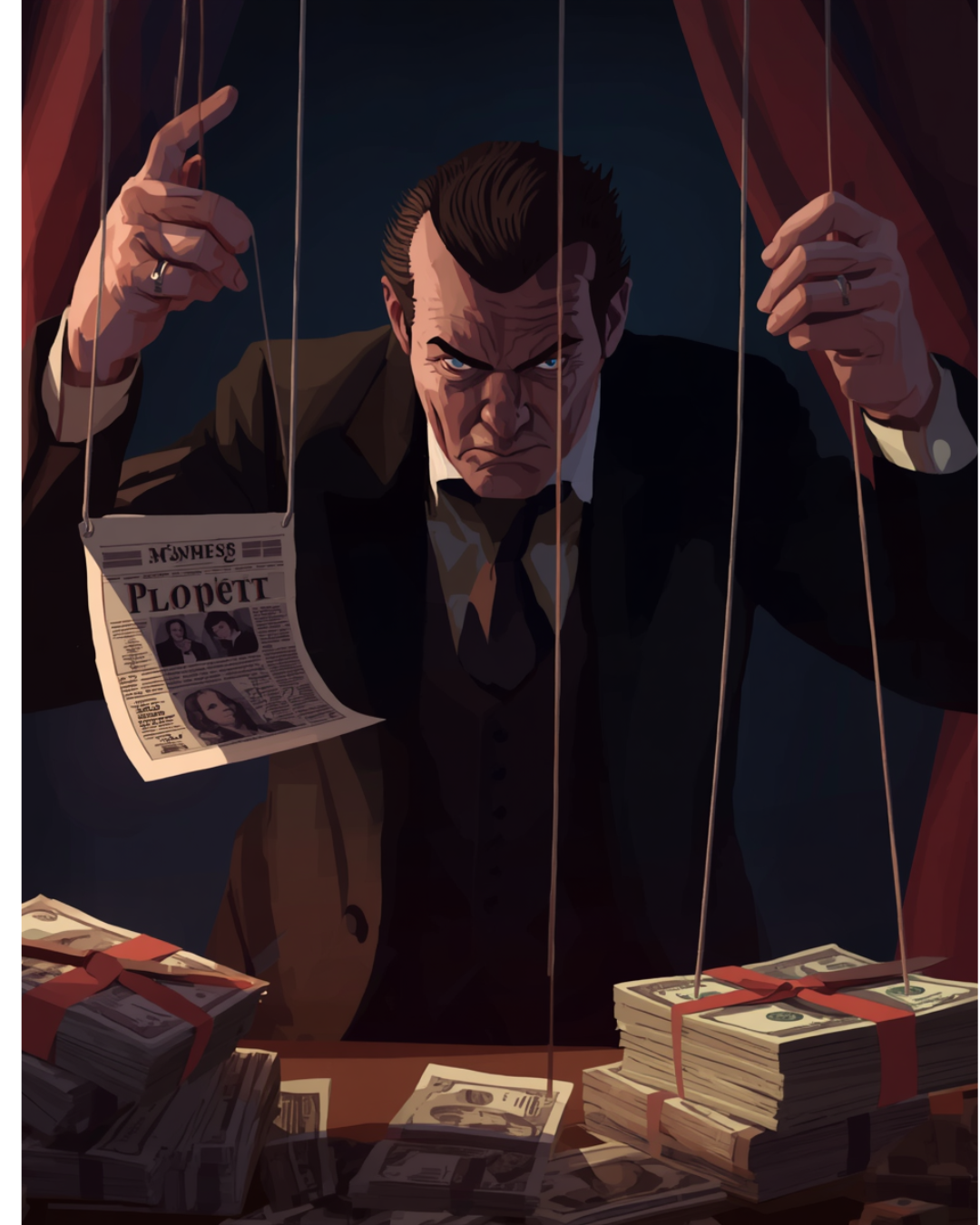
In Maryland as we head toward November, Governor Wes Moore has come under a lot of scrutiny for his less than honest depiction of his life, his military career, etc. As reporting of this increases, he has gotten more agitated and angrier at questions about those untruths. If the state now has the power to purchase ads on local stations and news outlets, can they also control what is being reported on those outlets?
Generally, it is the smaller, independent news outlets who report the information that the Moore, or any, state administration doesn’t want anyone to hear about. What if the state suddenly decides that some of those outlets don’t fit the description required to qualify for advertising because the outlet doesn’t report things the way the State wants. What if they are investigating a state agency? Would they be removed from the list of qualifiers? If they did qualify and were getting money, could the state suddenly cut their ad buys?
Isn’t this similar to what countries such as Russia, North Korea, or China do as they maintain their own news outlets? Is that what we really want? It’s a question we’d like the State Senators who voted for this to answer. J.H. Snider of MARYLAND MATTERS points out this problem in his article linked below:
Illustrative of the risk of media corruption, authoritarian governments, including Turkey, Hungary and Serbia, use government ad subsidies to control media coverage of themselves. This is effective because the media must think twice before biting the hand that feeds them.
NMaryland’s new media advertising law raises serious policy concerns – Maryland Matters
Advocates of the law say that it will help keep local newsrooms open and revenues for these outlets decline. But, again, J.H. Snider of MARYLAND MATTERS makes a strong argument against the subsidies:
The stated goal behind this legislation is commendable: Strengthening Maryland’s local news media. But this protectionist, pro-incumbent legislation corrupts independent media. Sometimes a cure is worse than the disease.
He also notes that local news outlets already get “massive public subsidies” through federal earmarks and legislation. Not only that, but having an FCC license is potentially worth billions to corporations. News outlets are exempt from the state’s 6% sales tax in Maryland and are supported by huge donations.
State agencies also testify that this legislation will reduce their effectiveness and ability to do their work.
By the way, does any truly independent journalist/outlet want this money with all the strings attached? Probably not.
We will see how this works in October. It should be interesting. In an authoritarian way.
Jan Greenhawk, Author
The post Maryland Adopts “End Run” Around First Amendment appeared first on The Easton Gazette.
