

WASHINGTON — In a significant win for privacy advocates, the U.S. Supreme Court ruled Monday that law enforcement’s use of geofence warrants constitutes a Fourth Amendment search, requiring police to satisfy constitutional probable cause standards before compelling technology companies to hand over cellphone location data.
The 6-3 decision in Chatrie v. United States extends the Court’s 2018 landmark ruling in Carpenter v. United States, affirming that even short-term location tracking can reveal intimate details of a person’s life — including familial, political, professional, religious, and sexual associations — and is therefore protected by the Constitution.
Justice Elena Kagan, writing for the majority, emphasized that individuals maintain a reasonable expectation of privacy in their cell phone location records. “Police intrude on that constitutionally protected interest when they demand the information,” she wrote, “even though for only a limited time, and from a third-party tech company.”
The ruling rejects the notion that users forfeit privacy rights simply by using apps and devices that share location data with companies like Google. It underscores the Fourth Amendment’s core purpose: “to safeguard the privacy and security of individuals against arbitrary invasions by governmental officials.”
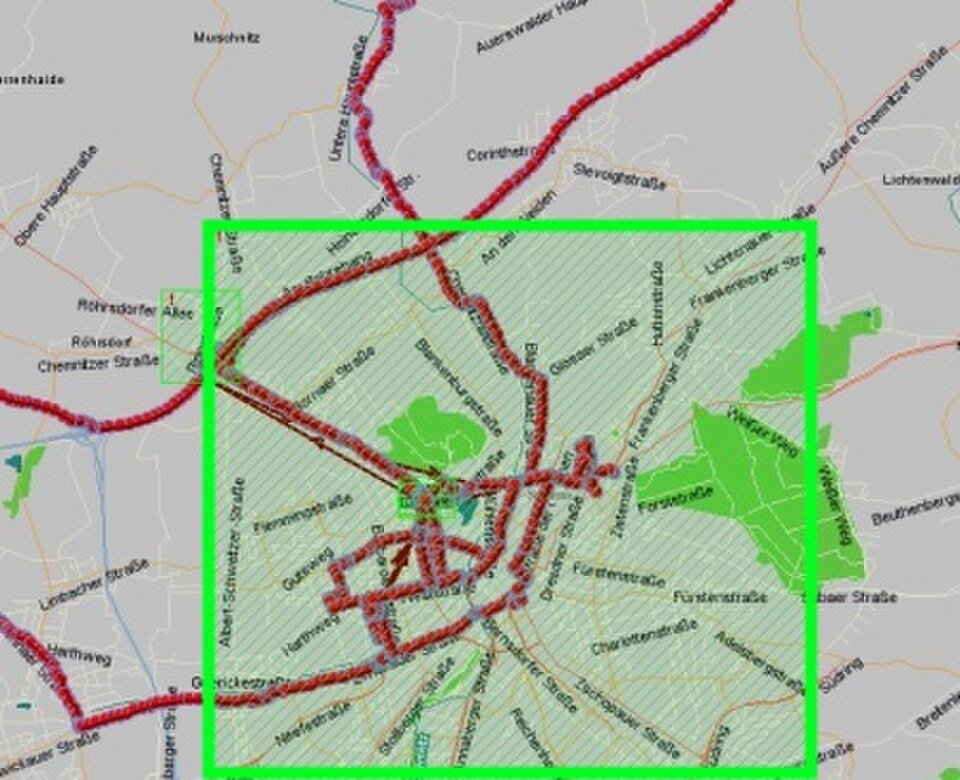
Geofence warrants allow investigators to draw a virtual boundary around a crime scene and compel tech firms to identify all devices present in that area during a specified window. Critics, including the Electronic Frontier Foundation (EFF), have long argued this practice sweeps up data from innocent bystanders with no suspected connection to the crime — effectively turning location history into a digital dragnet.
“This decision expands on our win in Carpenter eight years ago,” the EFF noted in a statement. “It confirms that even shorter-term surveillance of location data can constitute a search.” The organization filed an amicus brief in the case alongside the ACLU, the Center on Privacy & Technology at Georgetown Law, and other digital rights groups.
The Case Background
The ruling stems from the 2019 armed robbery of a federal credit union near Richmond, Virginia. When the investigation stalled, detectives obtained a geofence warrant from Google. The company initially identified 19 anonymous devices within a 150-meter radius of the bank during the relevant time. Investigators narrowed the pool and obtained identifying information for three users, including Okello Chatrie.
Police later recovered nearly $100,000 in cash, a handgun, and demand notes linked to the robbery from Chatrie. He pleaded guilty to bank robbery but challenged the geofence evidence, arguing that the warrants permitted investigators “to search first and develop suspicions later.”
The Supreme Court sent the case back to lower courts to assess whether the specific search was reasonable under the Fourth Amendment, without issuing an outright ban on geofence warrants.
Majority and Dissent
Chief Justice John Roberts and Justices Sonia Sotomayor, Brett Kavanaugh, and Ketanji Brown Jackson joined Kagan’s majority opinion. The Court drew on evolving Fourth Amendment doctrine, noting that modern searches can occur through digital intrusions on privacy expectations that society recognizes as reasonable — even without physical trespass.
Justice Samuel Alito dissented, joined in part by Justices Clarence Thomas and Amy Coney Barrett. Alito warned that the majority’s approach “will send seismic waves through our Fourth Amendment doctrine,” though he suggested it would have limited practical impact on Chatrie’s conviction.
Privacy advocates hailed the decision as a crucial check on expanding government surveillance powers in the digital age. The EFF described it as a “huge win,” underscoring how geofence warrants risk turning ordinary citizens into suspects simply for being “in the wrong place at the wrong time.”
The ruling is expected to reshape how law enforcement uses location data in investigations nationwide, potentially requiring stricter judicial oversight and narrower warrants going forward.
