

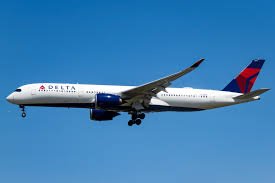
Technical problems force Delta to rely on manual calculations to get aircraft safely off the ground as holiday travel season gets underway.
Delta Air Lines passengers across the country faced flight delays Sunday after a technical problem disrupted the airline’s computer system responsible for calculating aircraft weight and balance before departure, according to an advisory from the Federal Aviation Administration (FAA).
The problem forced Delta to temporarily abandon its automated weight and balance system, requiring airline personnel to use manual procedures to keep flights operating safely while technicians worked to restore normal operations.
Delta confirmed that its teams were working to resolve the problem.
“Delta teams are working to restore automation for departing flight weight and balance calculations,” the airline said. “We’re using manual workarounds this morning to safely get flights departed.”
The company also thanked passengers for their patience and employees for their professionalism as the airline worked through the disruptions.
A Critical System for Aircraft Safety
Aircraft weight and balance calculations are not simply administrative paperwork. They are essential safety procedures that must be completed before an aircraft can depart.
Airlines must determine the total weight of an aircraft, including passengers, luggage, cargo and fuel, while also ensuring that the weight is distributed properly throughout the aircraft.
These calculations help ensure the aircraft remains within approved operating limits and that pilots have the correct information and settings for takeoff.
Major airlines typically rely on sophisticated computer systems to perform these calculations and transmit the necessary information to flight crews.
When those systems become unavailable, airlines may have to resort to manual procedures, potentially slowing down the departure process and creating a ripple effect throughout their flight schedules.
Atlanta Airport Among Those Experiencing Disruptions
The timing of the disruption could hardly be worse, with the busy Thanksgiving holiday travel period underway.
More than four million travelers are expected to pass through Hartsfield-Jackson Atlanta International Airport, Delta’s largest hub, between November 19 and December 1, according to an airport news release.
Atlanta was already experiencing significant delays Sunday afternoon. Flight-tracking website FlightAware reported that more than 400 departing flights were delayed, along with slightly fewer arriving flights.
However, the figures did not specify how many of those delays were directly attributable to Delta’s computer problems.
The airport confirmed that the disruption was limited to Delta operations and was not an airport-wide problem. Delta was responsible for managing the situation.
Passengers were already expressing concerns about the potential for additional travel headaches.
Atlanta resident Shane Rocha, who was traveling with her family to visit relatives, told CNN affiliate WANF that her family had experienced no problems on an earlier flight that week.
“Luckily we’re only 19 minutes delayed, knock on wood,” Rocha said. “Hopefully it stays that low.”
FAA Says Problem Is Not Related to Air Traffic Control
The FAA confirmed that Sunday’s Delta disruption was not connected to federal air traffic control systems.
“Delta is working to resolve issues with the airline’s weight and balance system,” the agency said in a social media post, advising passengers to contact Delta for the latest flight information.
The clarification comes after a separate nationwide aviation disruption just over a week earlier, when flights across the country were grounded, triggering widespread delays and cancellations that continued for several days.
The FAA previously indicated that the earlier outage likely originated from an outdated copper wire at a remote location.
Although the two incidents involve different systems, their close timing raises additional concerns for travelers who have already experienced significant disruptions.
Not the First Airline to Experience This Type of Failure
Delta is not the first major carrier to encounter problems with its aircraft weight and balance computer systems.
In 2025, United Airlines experienced a similar technical failure that reportedly resulted in more than 1,000 flight delays and dozens of cancellations.
The incident demonstrated how dependent modern airline operations have become on automated systems and how quickly a technical problem involving one critical computer system can disrupt an airline’s entire operation.
While manual procedures can provide a backup when automation fails, they can also significantly slow down operations, particularly at major airline hubs handling hundreds of departures each day.
Growing Dependence on Technology Raises Questions
Modern aviation relies on an extensive network of computer systems to coordinate everything from flight planning and aircraft maintenance to passenger processing, baggage handling and aircraft loading.
These systems have made commercial aviation more efficient, but they also create vulnerabilities when critical technology fails.
Delta’s latest disruption is another reminder that even when aircraft themselves are mechanically sound, problems with the computer systems supporting airline operations can bring departures to a crawl.
With millions of Americans preparing to travel for Thanksgiving, passengers will be hoping Delta can restore its automated systems quickly and prevent Sunday’s technical problem from creating even greater disruptions during one of the busiest travel periods of the year.
For now, Delta passengers are being advised to check their flight status directly with the airline before heading to the airport.
This story has been updated with additional information.
